

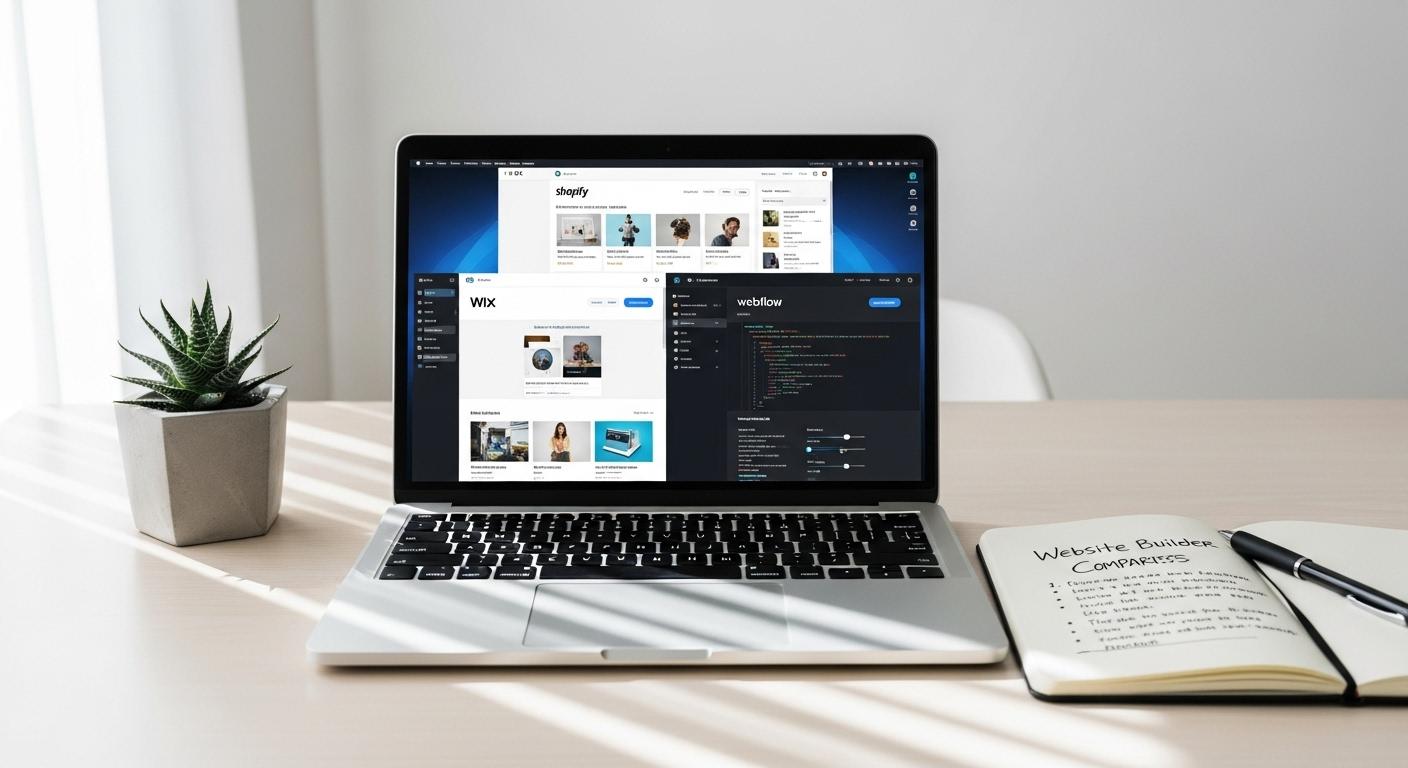
You stop, just for a moment, and admit it—the search for the best alternatives to Webflow leads somewhere real. If you feel boxed in by Webflow or the thought alone annoys you by daytime, the landscape has changed. The market brims with options for 2025, several tools can outpace Webflow for price, design freedom, or the simple pleasure of quick results.
The main reasons for searching for the best alternatives to Webflow
The days stretch longer when doubts about the platform settle in. Does the cost balloon without warning? Frustration creeps in when features you need remain absent or buried under menus no one fully remembers. Routine tasks demand patience. The price keeps rising, sometimes passing twenty-five euros per month for very little, or nearing forty euros if e-commerce enters the scene. You sign up thinking a no-code label means simple, but quickly run into tutorials, settings, and a learning curve.
Topic to read : What role does cybersecurity education play in UK schools?
The e-commerce functions cause concern as well. Managing products usually takes too many steps, and integrated payments sometimes disappoint. For designers ready to embark on bigger projects, those graphic choices seem so familiar, repetitive, bland. Support, especially in French, may test your calm. Feedback and solutions wander. If details seem missing, a more developed perspective appears at https://www.gemeosagency.com/en/blog/what-are-the-best-alternatives-to-webflow—it helps compare nuances better than a scattered forum post.
The regular limits faced by diverse profiles
Sellers grow skeptical, creative spirits lose patience, and as ambitions grow, obstacles multiply. Webflow struggles with flexibility for high volume, complex integration, or multilingual support. If monotony creeps into the workflow and every new idea meets a wall, those limits prompt a new search. Some pretend their system allows nearly anything but reality sets rules you cannot bend. When you keep repeating “Is that everything?” the next step seems obvious.
This might interest you : What role does cybersecurity education play in UK schools?
The most promising website builders in 2025, better choices than Webflow?
You keep hearing about new names, new tools. Platforms multiply, some recognizable, others innovative. None takes the prize on every front, but a few crush limits where Webflow stumbles—simplicity, control, or cost. The choice looks overwhelming until you break it down. Suddenly, certain builders pull ahead for your needs. You compare, take note, coffee in hand:
| Platform | Ease of Use | Flexibility with Design | Monthly Price | Main Strength |
|---|---|---|---|---|
| Wix | High | Intuitive customization | 14 to 24 € | True drag-and-drop editing |
| Squarespace | Very accessible | Premium layouts | 15 to 30 € | Striking, clean templates |
| WordPress.com | Grows with you | Extensible without limits | 9 to 25 € | Massive plugin library |
| Shopify | Built for commerce | Adapted layouts | 27 to 79 € | Robust online store management |
| Framer | For design experts | Animated, interactive visuals | 12 to 20 € | Next-gen animation |
Wix welcomes new users with unfussy simplicity. Squarespace draws attention with visuals designers often hope for. WordPress.com fits those who crave long-term freedom or who expect the unexpected. Shopify? Stability in commerce. Framer? No more static pages and the promise of movement, interaction, distinction. If speed, price, or pure playfulness matter, those names keep coming back.
The platforms for tight budgets
Who wants endless add-ons when money matters more? Some want only a solid site—nothing else. Zyro keeps costs low, less than eight euros for publication-ready content. Weebly never asks for more than thirteen euros per plan, surprising after so many years on the market. WordPress.com lowers the entry bar—just under ten euros for new writers or creative students. Free up energy for what counts most rather than chasing after updates and invoices.
The creators where commerce comes first
When products and payments occupy your days, Shopify stands firm with logical site management and checkout that rarely fails. BigCommerce attracts shop owners who devour analytics, automate with a smile, and want more control. Squarespace champions beautiful shops, refusing to sacrifice looks for simplicity. Shopify’s worldwide reach climbs close to one in five online shops—a sign, perhaps, of shifting expectations for sellers everywhere.
The world of open-source builders for technical minds
Some users demand access—to the code, the rules, the entire playground. WordPress.org supports this search for control, never controlling back. A strong community keeps it moving. Joomla serves those who love technical depth, not afraid to probe. Ghost brings writing and fast publishing back to content creators. No one imposes boundaries. Publish on your schedule, experiment with your approach, answer to no one but your imagination.
The features that can sway your choice of a Webflow alternative
When you scan a website builder, you go deeper than looks. The design catalogues often reveal surprises: Squarespace balances elegance and utility, Wix expands template numbers well past 800. Automation and connections tell another story—Shopify syncs payments and inventory, WordPress.com links up with WooCommerce and Google Analytics painlessly. Hosting never leaves you stranded—Wix invests in reliability for Europe, and external resources like the findings of the Cloud Native Computing Foundation confirm it.
Visibility counts from the start. WordPress.com and Squarespace both work to help audiences discover your site, no jargon included. Customer service tips the balance—at midnight, a detailed FAQ sometimes becomes your lifeline. Those speaking French will relax with Wix’s localized guides and videos—a minor detail, but real help for less experienced users.
| Aspect | Quick comparison |
|---|---|
| Templates | Squarespace superb visuals, Wix the widest selection |
| Integrations | Shopify leads for logistics, WordPress.com for plugins galore |
| Hosting | Wix, the quickest; Squarespace, reliably stable; WordPress.com, adapts as you grow |
| SEO/Marketing | WordPress.com and Squarespace, solutions built-in; Framer, more manual |
| Support | Wix, rich content in French; Shopify, live chat; Squarespace, responsive by email |
- Simplicity wins when the navigation slips into place easily
- The price matters for small businesses hoping for regular bills
- Integrations improve workflows and keep teams efficient
- Quality support and resources cut down on risk and delay
The strengths and flaws in switching from Webflow to an alternative
If the jump tempts you, everything shifts—sometimes for good, sometimes not. Wix smooths out bumps but certain advanced tweaks slip away. Squarespace dazzles with galleries but waits for plugin innovation. Shopify boosts shop owners while gently testing budgets, especially if style matters as much as numbers. WordPress.org wins friends for its freedom but expects time for upkeep. Emma P., a freelance designer, once admitted,
“Leaving Webflow, I felt something new—working on Wix was freeing, everything came together. Still, once in a while, nothing replaces that tiny adjustment, that precision.”
Her switch nudged her clients to take risks. The lesson sticks. No builder wins every heart for the same reason.
The process of choosing among the best Webflow alternatives
The fog lifts as the project sharpens. Photographers warm up to Squarespace for its clean, responsive layouts. Entrepreneurs and freelancers reach for Wix, eager to see their work live before coffee cools. Tech lovers always point back to WordPress.org—you want endless combinations, you go there. Retailers hold tight to Shopify, comforted by security and strength in a world with bigger digital threats. Reports, such as those from ANSSI 2024, echo how vital trusted infrastructure keeps becoming.
Leaving Webflow adds a bit of turbulence—habit pulls but novelty wins out. The first week brings mistakes, confusion, and awkward menus. But risk and curiosity revive creativity. The meaningful pivot appears when you let go of past patterns so a new vision takes shape at your speed. The leap asks for a little bravery, perhaps, but pays off with a platform better suited to what you demand now. No one looks back once the project flows and goals sit on your own terms.